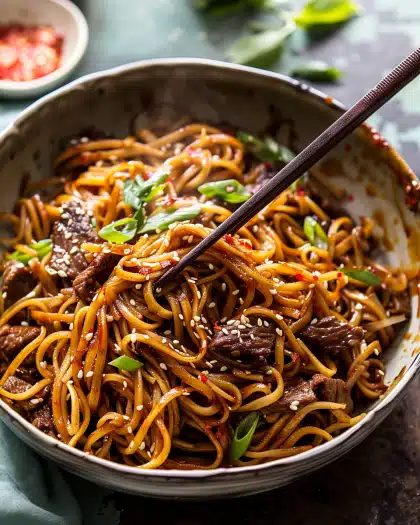
If you are looking for a dish that flawlessly blends a punch of Korean flavor with comforting Italian vibes, you will absolutely love this Quick Gochujang Pasta Recipe. It’s vibrant, creamy, and packed with umami from the spicy gochujang paste and rich coconut milk. Perfect for busy weeknights, this pasta delivers big taste without any fuss, making it a favorite to whip up whenever you want something both satisfying and exciting on your plate.
Ingredients You’ll Need

The beauty of this Quick Gochujang Pasta Recipe lies in its simple yet thoughtfully chosen ingredients. Each one plays a crucial role in building layers of flavor and texture, from the silky coconut milk to the fresh brightness of baby spinach.
- 1 lb dried pasta of choice (454g): Pick your favorite shape to suit your mood or pantry stock; spaghetti or penne work wonderfully.
- 2 Tablespoons oil (canola or sunflower): A neutral oil is best here to let the gochujang shine.
- 2 onions, finely chopped: Adds sweetness and depth when sautéed until golden.
- 4 cloves garlic, minced: Brings aromatic warmth that complements the spicy notes.
- 4 Tablespoons tomato paste (tomato concentrate): Provides a rich, tangy base that balances the heat.
- 4 Tablespoons gochujang paste: The star ingredient with a perfect mix of heat, sweetness, and umami.
- ¼ teaspoon salt: Enhances all the flavors without overpowering them.
- 13.5 fl. oz. can coconut milk (400ml): Offers creaminess and a subtle sweetness to mellow the spice.
- 3-4 cups baby spinach (100-125g): Adds vibrant color and a fresh, tender bite.
- 1 Tablespoon lemon juice: Brightens and balances the richness of the sauce.
- Optional – 3 Tablespoons chopped roasted walnuts or pine nuts: Adds a delightful crunch and nutty contrast.
How to Make Quick Gochujang Pasta Recipe
Step 1: Cook the Pasta Perfectly
Start by boiling your pasta in plenty of well-salted water until it reaches just the right al dente texture. This ensures the pasta holds up beautifully when tossed with the luscious sauce later on. Be sure to save a cup of pasta water before draining—it’s pure gold for adjusting your sauce’s consistency.
Step 2: Sauté the Onions and Garlic
Heat the oil over medium-high heat, then add the finely chopped onions. Let them cook gently until they’re lightly browned and release their natural sweetness, about five minutes. Next, add the minced garlic and sauté for an additional two minutes to fill the kitchen with an irresistible aroma.
Step 3: Build the Flavor Base
In goes the gochujang paste, tomato paste, and a pinch of salt. Stir everything together and cook for about three minutes until the mixture darkens slightly and becomes richly fragrant. This step deepens the sauce’s complex, tangy heat.
Step 4: Add Coconut Milk and Simmer
Pour in the coconut milk and whisk gently to combine into a silky sauce. Let everything simmer for 3 to 5 minutes until the mixture thickens slightly, achieving a creamy, luscious consistency that will coat your pasta beautifully.
Step 5: Incorporate Spinach and Lemon
Add the fresh baby spinach and lemon juice to the sauce, stirring until the spinach just wilts. This introduces a wonderful freshness and a subtle zing to balance the creamy heat perfectly.
Step 6: Combine Pasta and Sauce
Toss the drained pasta into the sauce, mixing well to ensure every strand is coated in that flavorful blend. Use the reserved pasta water a little at a time to loosen the sauce if it feels too thick—this trick makes the pasta silky and smooth without watering down the flavor.
Step 7: Adjust and Serve
Give everything a final taste check and adjust salt or lemon juice if needed. Serve immediately with an optional sprinkle of toasted walnuts or pine nuts for an extra textural kick.
How to Serve Quick Gochujang Pasta Recipe

Garnishes
A scattering of toasted nuts adds a nutty crunch that pairs perfectly with the creamy sauce, while a few fresh basil or cilantro leaves can introduce an aromatic freshness. A light dusting of grated Parmesan is surprisingly delightful if you want a cheesy twist without overpowering the gochujang’s bold flavors.
Side Dishes
This quick gochujang pasta recipe shines as the star of your meal, but it also pairs beautifully with a simple green salad tossed in a lemon vinaigrette or some crispy garlic bread to mop up every last bit of sauce. For a heartier spread, steamed or roasted vegetables can add color and extra nutrients.
Creative Ways to Present
Try serving your pasta in rustic bowls with a bright wedge of lemon on the side so everyone can add a fresh splash at the table. For dinner parties, garnish with edible flowers or microgreens to elevate that cozy home-cooked feel into something special and festive.
Make Ahead and Storage
Storing Leftovers
Leftover Quick Gochujang Pasta Recipe can be stored in an airtight container in the fridge for up to 3 days. The flavors actually deepen overnight, making your next meal just as exciting as the first.
Freezing
This pasta doesn’t freeze well due to the creamy coconut milk sauce, which can separate upon reheating. It’s best to enjoy fresh or saved refrigerated for quick reheats within a few days.
Reheating
When reheating, warm gently on the stovetop over low heat and add a splash of water or coconut milk to restore the sauce’s creaminess and prevent it from drying out. Stir frequently until heated through for the best texture and flavor.
FAQs
Is gochujang spicy?
Gochujang has a moderate level of heat balanced by sweetness and umami, making it flavorful without being overwhelmingly spicy. You can adjust the amount used in the recipe to suit your own heat preference.
Can I use any type of pasta?
Absolutely! This Quick Gochujang Pasta Recipe is versatile and works well with a variety of pasta shapes, whether long like spaghetti or short like penne or fusilli, depending on your texture preference.
What can I substitute for coconut milk?
If you don’t have coconut milk on hand, you can try using heavy cream or a plant-based milk thickened with a bit of flour or cornstarch, but coconut milk adds a unique subtle sweetness and creaminess that complements gochujang beautifully.
Can I make this recipe vegan?
Yes! This recipe is naturally vegan as long as you skip any cheese toppings. Make sure your gochujang paste does not contain any non-vegan ingredients, which are uncommon but worth checking.
How can I make the sauce less spicy?
If you prefer a milder sauce, reduce the gochujang quantity by half and compensate with a little extra tomato paste and coconut milk to keep the volume and creaminess intact.
Final Thoughts
This Quick Gochujang Pasta Recipe is an absolute game-changer for those moments when you crave something both comforting and exciting without spending hours in the kitchen. It brings together bold Korean flavors with creamy Italian-style pasta in a way that’s surprisingly simple yet incredibly satisfying. Give it a try—you might just find your new go-to weeknight dinner that everyone will be asking for again and again.
PrintQuick Gochujang Pasta Recipe

Quick Gochujang Pasta is a vibrant and flavorful fusion dish that combines the spicy and savory notes of Korean gochujang paste with creamy coconut milk and fresh spinach. Ready in just 20 minutes, this easy pasta recipe offers a delightful twist on traditional tomato-based sauces, perfect for a weeknight dinner that packs a punch.
- Prep Time: 5 minutes
- Cook Time: 15 minutes
- Total Time: 20 minutes
- Yield: 4 servings
- Category: Main Course
- Method: Stovetop
- Cuisine: Fusion (Korean-Italian)
- Diet: Vegetarian
Ingredients
Pasta
- 1 lb dried pasta of choice (454g)
Sauce
- 2 Tablespoons oil (plain oil like canola or sunflower)
- 2 onions, finely chopped
- 4 cloves garlic, minced
- 4 Tablespoons tomato paste (tomato concentrate)
- 4 Tablespoons gochujang paste
- ¼ teaspoon salt
- 13.5 fl. oz. can coconut milk (400ml)
Add-ins
- 3–4 cups baby spinach (100-125g)
- 1 Tablespoon lemon juice
- (Optional) 3 Tablespoons chopped roasted walnuts or pine nuts
Instructions
- Cook the pasta: Boil pasta in well-salted water according to package instructions until al dente. Reserve one cup of pasta water before draining.
- Sauté onions: Heat oil in a large deep saucepan or skillet over medium-high heat. Add finely chopped onions and cook, stirring occasionally, for about 5 minutes until lightly browned.
- Add garlic: Stir in minced garlic and cook for an additional 2 minutes until fragrant.
- Incorporate seasonings: Mix in gochujang paste, tomato paste, and salt. Fry the mixture for 3 minutes, stirring often until the sauce darkens slightly.
- Add coconut milk and simmer: Pour in the coconut milk and whisk to combine thoroughly with the pastes. Let the sauce simmer gently for 3-5 minutes until it thickens.
- Add spinach and lemon juice: Stir in baby spinach and lemon juice, then remove the pan from the heat.
- Combine pasta and sauce: Add the drained pasta to the sauce in the pan. Toss to coat the pasta evenly, adding reserved pasta water a little at a time to loosen the sauce to desired consistency.
- Adjust and serve: Taste and adjust seasoning if needed. Serve immediately topped with optional toasted chopped walnuts or pine nuts for extra crunch.
Notes
- Gochujang paste can be found in Asian grocery stores or online and adds a spicy, slightly sweet depth to the sauce.
- Use any dried pasta you prefer – penne, spaghetti, fusilli, or rigatoni all work well.
- If you prefer less spice, reduce the gochujang amount to 2 tablespoons or substitute with a milder chili paste.
- For a nut-free version, omit the toasted walnuts or pine nuts.
- Reserve pasta water is key to adjusting the sauce consistency and helping it cling to the pasta perfectly.
- This recipe is vegetarian, and substituting coconut milk keeps it dairy-free.